
Custom Web Development vs Template-Based Websites: What's Better for Your Business?
The right choice is not about what launches fastest. It is about what continues to support performance, SEO, security, and business growth two years later.
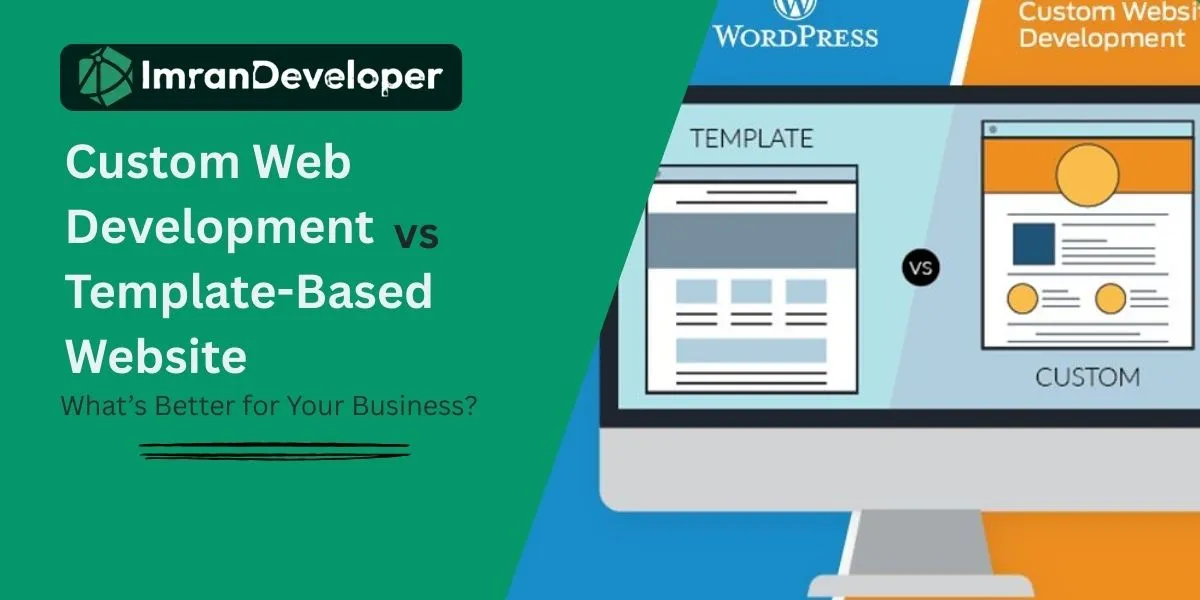
Template-based websites can work for basic informational use cases and early validation. But once a website becomes a revenue engine, growth system, or product layer, the constraints of generic themes become much more expensive.
Why Businesses Choose Templates
What Custom Development Changes
Performance
Template-Based
Often bloated with unused scripts, excess CSS, and plugin-heavy architecture.
Custom Build
Ships only the functionality you need, which improves speed, Core Web Vitals, and mobile performance.
Scalability
Template-Based
Limited by theme structure and generic workflows.
Custom Build
Supports modular architecture, advanced features, integrations, and business-specific growth.
SEO Structure
Template-Based
Can introduce weak heading hierarchy, heavy DOM structure, and plugin dependency.
Custom Build
Provides full control over semantic HTML, metadata, URL architecture, and rendering strategy.
Security
Template-Based
Relies on third-party themes and plugins, which expand the attack surface.
Custom Build
Reduces dependency risk and allows controlled authentication, APIs, and data flow.
Long-Term Cost
Template-Based
Lower upfront cost, but often leads to redesigns, plugin conflicts, and rebuilds.
Custom Build
Higher initial investment, but lower long-term rebuild and maintenance cost.
Brand and Flexibility
Template-Based
Works for basic sites, but limits differentiation and workflow-specific UX.
Custom Build
Enables brand-aligned interfaces, custom interactions, and deeper integration with business systems.
| Best Fit | Template Website | Custom Development |
|---|---|---|
| Use Case | Early validation, informational pages, tight budgets | Growth-focused brands, SaaS products, revenue-critical platforms |
| Growth Path | Often needs redesign or rebuild later | Built to expand with features, data, and integrations |
| Business Value | Short-term speed | Long-term digital infrastructure |
Frequently Asked Questions
Is custom web development better than templates?
Custom development is better for scalability, performance, integration depth, and long-term flexibility. Templates are mainly useful for simpler and faster launches.
Are template websites bad for SEO?
Not always, but many templates carry structural and performance limitations that make technical SEO harder to execute well.
Can I switch from template to custom later?
Yes, but the switch usually involves redesign, redevelopment, data migration, and possible SEO restructuring, so planning ahead is cheaper.
Which is better for startups?
If the startup expects serious growth, SaaS functionality, or custom workflows, custom development is usually the better strategic choice.
Does custom development improve website speed?
Yes. Custom builds remove unnecessary assets and allow tighter control over code structure and rendering, which usually improves speed.
Can custom websites integrate with other tools?
Yes. Custom development makes it easier to integrate CRMs, payment gateways, APIs, and automation systems without fighting a rigid template structure.
Hire for Your Next Project
From full stack web apps to AI-driven solutions, we build scalable, secure applications tailored to your business.